Hyper-Sex: Media-driven Eroticism is Omnipresent in Modern Culture, Distorting Intimacy and Commodifying Desire.

Hyper-Sex critiques this phenomenon, placing a figure atop a giant banana with whipped cream and a cherry—an absurd yet striking symbol of exaggerated desire.
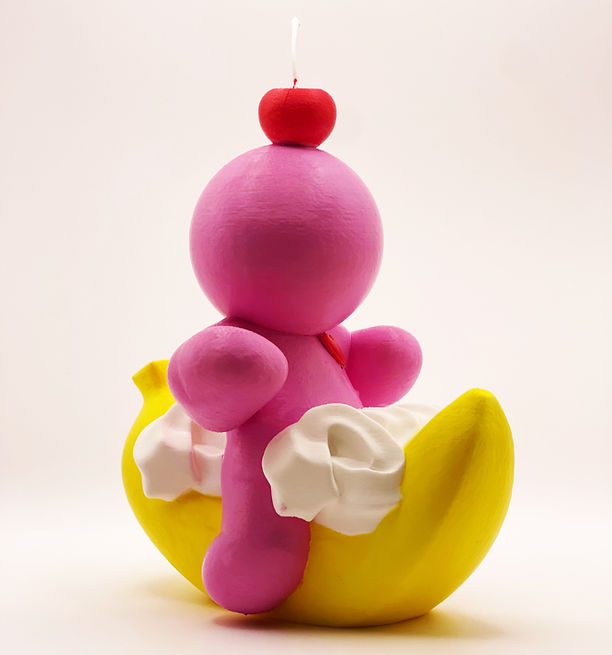
Through pop-surrealism and figurative sculpture, the work interrogates the effects of media on human relationships, emphasizing how cultural obsession with sexual spectacle undermines authentic connection and personal freedom.
The sculpture challenges society’s complicity in normalizing exploitation. People are bombarded daily by sexualized imagery, which often reinforces power imbalances and objectification.
By transforming erotic excess into a tangible, critical art form, the piece invites reflection on how we participate in systems that distort desire and commodify human bodies. True equality requires dismantling narratives that reduce people to objects of consumption rather than autonomous individuals deserving respect and agency.
Moreover, the work is a call for liberation. Hypersexuality in media often masks deeper societal inequities, including gender oppression and economic exploitation. Hyper-Sex uses humor, surrealism, and symbolism to expose the hidden costs of these systems and urge viewers to envision a culture where intimacy is consensual, authentic, and free from coercive commercial or cultural pressures.
Finally, the sculpture asserts that cultural transformation is possible. By examining desire, media influence, and symbolic excess, the work asks people to reclaim autonomy over their bodies, relationships, and pleasure. Freedom and equality are essential to human dignity, and no culture that exploits intimacy can claim to be just or ethical.


Comments